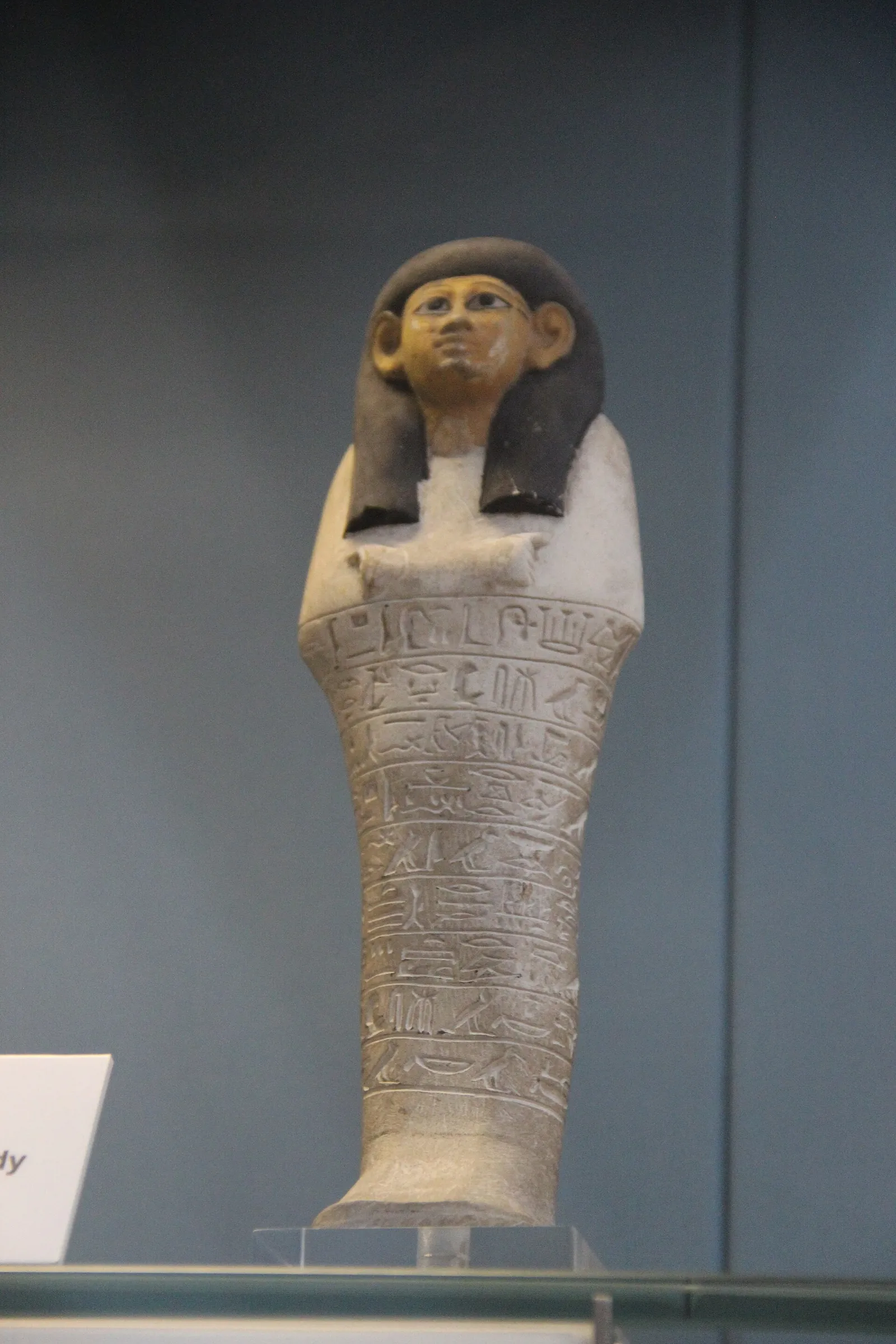
Small figures carry large questions about labour, status, text and the hope that work in the next world could be delegated. The goal is not to exhaust the object, but to make the evidence, limits and museum choices easier to see.
CHAPTER 01
A substitute worker
Shabtis were connected to required labour in the afterlife. Their role developed, and not every small funerary figure works identically.
Begin with the physical record. Describe scale, edge, surface, joins and damage before turning those observations into a historical claim.
Object record
Record what is visible without filling missing context.
Material note
Connect technique to workshop decisions and available resources.
Context check
Restore the larger assemblage, site and ritual setting.
Museum question
Ask how display, caption and ownership frame the object today.
LOOK AGAINShabtis were connected to required labour in the afterlife. Their role developed, and not every small funerary figure works identically. What detail on the object could support—or challenge—this interpretation?
A responsible note
The museum history belongs inside the object story. Location, attribution, restoration and ownership should be dated when they can change and qualified when the record remains incomplete.
- Separate stable context from current display information.
- Prefer an object record to an anonymous travel summary.
- Distinguish an original, reconstruction, replica and digital image.
- Keep contested interpretations visible.
CHAPTER 02
Scale and number
One figure and a large group produce different meanings. Quantity can speak to status, organisation and changing funerary practice.
Begin with the physical record. Describe scale, edge, surface, joins and damage before turning those observations into a historical claim.
Object record
Record what is visible without filling missing context.
Material note
Connect technique to workshop decisions and available resources.
Context check
Restore the larger assemblage, site and ritual setting.
Museum question
Ask how display, caption and ownership frame the object today.
LOOK AGAINOne figure and a large group produce different meanings. Quantity can speak to status, organisation and changing funerary practice. What detail on the object could support—or challenge—this interpretation?
A responsible note
The museum history belongs inside the object story. Location, attribution, restoration and ownership should be dated when they can change and qualified when the record remains incomplete.
- Separate stable context from current display information.
- Prefer an object record to an anonymous travel summary.
- Distinguish an original, reconstruction, replica and digital image.
- Keep contested interpretations visible.
CHAPTER 03
Text as instruction
Inscriptions could name the owner and command the figure. Variation, abbreviation and error reveal real production conditions.
Begin with the physical record. Describe scale, edge, surface, joins and damage before turning those observations into a historical claim.
Object record
Record what is visible without filling missing context.
Material note
Connect technique to workshop decisions and available resources.
Context check
Restore the larger assemblage, site and ritual setting.
Museum question
Ask how display, caption and ownership frame the object today.
LOOK AGAINInscriptions could name the owner and command the figure. Variation, abbreviation and error reveal real production conditions. What detail on the object could support—or challenge—this interpretation?
A responsible note
The museum history belongs inside the object story. Location, attribution, restoration and ownership should be dated when they can change and qualified when the record remains incomplete.
- Separate stable context from current display information.
- Prefer an object record to an anonymous travel summary.
- Distinguish an original, reconstruction, replica and digital image.
- Keep contested interpretations visible.
CHAPTER 04
Materials and workshops
Faience, wood, stone and clay offered different surfaces, costs and workshop routines. Blue is technology as well as symbolism.
Begin with the physical record. Describe scale, edge, surface, joins and damage before turning those observations into a historical claim.
Object record
Record what is visible without filling missing context.
Material note
Connect technique to workshop decisions and available resources.
Context check
Restore the larger assemblage, site and ritual setting.
Museum question
Ask how display, caption and ownership frame the object today.
LOOK AGAINFaience, wood, stone and clay offered different surfaces, costs and workshop routines. Blue is technology as well as symbolism. What detail on the object could support—or challenge—this interpretation?
A responsible note
The museum history belongs inside the object story. Location, attribution, restoration and ownership should be dated when they can change and qualified when the record remains incomplete.
- Separate stable context from current display information.
- Prefer an object record to an anonymous travel summary.
- Distinguish an original, reconstruction, replica and digital image.
- Keep contested interpretations visible.
CHAPTER 05
Tools and roles
Agricultural implements and overseer forms organise an imagined workforce. Tiny details connect cosmic hope to social structures.
Begin with the physical record. Describe scale, edge, surface, joins and damage before turning those observations into a historical claim.
Object record
Record what is visible without filling missing context.
Material note
Connect technique to workshop decisions and available resources.
Context check
Restore the larger assemblage, site and ritual setting.
Museum question
Ask how display, caption and ownership frame the object today.
LOOK AGAINAgricultural implements and overseer forms organise an imagined workforce. Tiny details connect cosmic hope to social structures. What detail on the object could support—or challenge—this interpretation?
A responsible note
The museum history belongs inside the object story. Location, attribution, restoration and ownership should be dated when they can change and qualified when the record remains incomplete.
- Separate stable context from current display information.
- Prefer an object record to an anonymous travel summary.
- Distinguish an original, reconstruction, replica and digital image.
- Keep contested interpretations visible.
CHAPTER 06
The collector’s crowd
Museums often display shabtis in dense groups. The visual effect is compelling, but provenance must not disappear into repetition.
Begin with the physical record. Describe scale, edge, surface, joins and damage before turning those observations into a historical claim.
Object record
Record what is visible without filling missing context.
Material note
Connect technique to workshop decisions and available resources.
Context check
Restore the larger assemblage, site and ritual setting.
Museum question
Ask how display, caption and ownership frame the object today.
LOOK AGAINMuseums often display shabtis in dense groups. The visual effect is compelling, but provenance must not disappear into repetition. What detail on the object could support—or challenge—this interpretation?
A responsible note
The museum history belongs inside the object story. Location, attribution, restoration and ownership should be dated when they can change and qualified when the record remains incomplete.
- Separate stable context from current display information.
- Prefer an object record to an anonymous travel summary.
- Distinguish an original, reconstruction, replica and digital image.
- Keep contested interpretations visible.
RESEARCH TRAIL
Where to continue
- Institutional collection record and object number.
- Published catalogue or conservation report.
- Archaeological context and provenance documentation.
- Image creator and reuse license.
Editorial review: 16 July 2026. This essay does not claim an unrecorded first-hand visit.