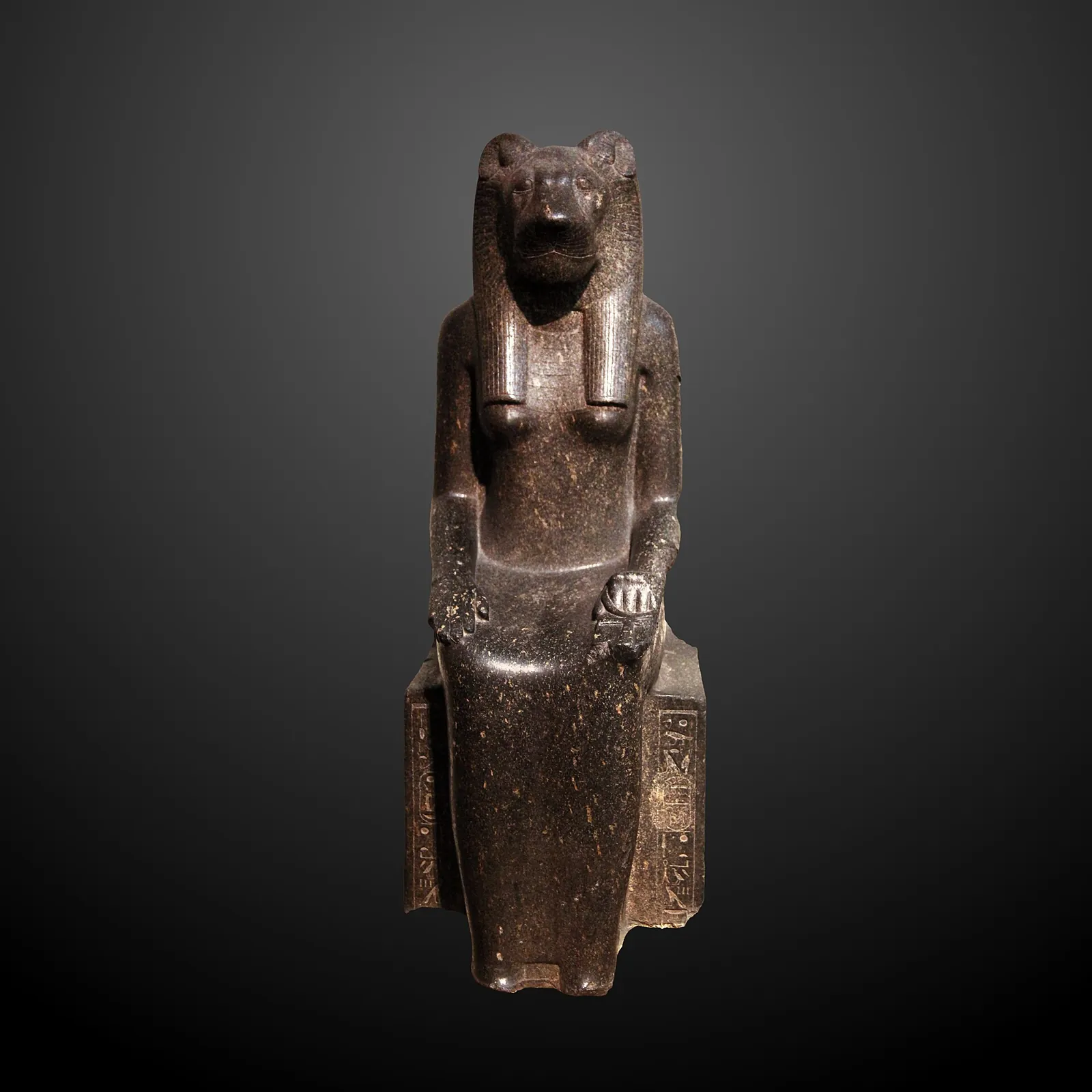
Why hundreds of related statues change the meaning of one lion-headed goddess: repetition, ritual presence, healing and royal strategy. The goal is not to exhaust the object, but to make the evidence, limits and museum choices easier to see.
CHAPTER 01
Lioness and goddess
Sekhmet’s form joins human and lioness attributes. Description should resist reducing divine power to a modern personality label.
Begin with the physical record. Describe scale, edge, surface, joins and damage before turning those observations into a historical claim.
Object record
Record what is visible without filling missing context.
Material note
Connect technique to workshop decisions and available resources.
Context check
Restore the larger assemblage, site and ritual setting.
Museum question
Ask how display, caption and ownership frame the object today.
LOOK AGAINSekhmet’s form joins human and lioness attributes. Description should resist reducing divine power to a modern personality label. What detail on the object could support—or challenge—this interpretation?
A responsible note
The museum history belongs inside the object story. Location, attribution, restoration and ownership should be dated when they can change and qualified when the record remains incomplete.
- Separate stable context from current display information.
- Prefer an object record to an anonymous travel summary.
- Distinguish an original, reconstruction, replica and digital image.
- Keep contested interpretations visible.
CHAPTER 02
The force of repetition
Related statues were installed in large numbers. Multiplicity was meaningful, not evidence that each object was interchangeable.
Begin with the physical record. Describe scale, edge, surface, joins and damage before turning those observations into a historical claim.
Object record
Record what is visible without filling missing context.
Material note
Connect technique to workshop decisions and available resources.
Context check
Restore the larger assemblage, site and ritual setting.
Museum question
Ask how display, caption and ownership frame the object today.
LOOK AGAINRelated statues were installed in large numbers. Multiplicity was meaningful, not evidence that each object was interchangeable. What detail on the object could support—or challenge—this interpretation?
A responsible note
The museum history belongs inside the object story. Location, attribution, restoration and ownership should be dated when they can change and qualified when the record remains incomplete.
- Separate stable context from current display information.
- Prefer an object record to an anonymous travel summary.
- Distinguish an original, reconstruction, replica and digital image.
- Keep contested interpretations visible.
CHAPTER 03
Stone and presence
Hard stone, polished surface and frontal pose organise an encounter with controlled, enduring power.
Begin with the physical record. Describe scale, edge, surface, joins and damage before turning those observations into a historical claim.
Object record
Record what is visible without filling missing context.
Material note
Connect technique to workshop decisions and available resources.
Context check
Restore the larger assemblage, site and ritual setting.
Museum question
Ask how display, caption and ownership frame the object today.
LOOK AGAINHard stone, polished surface and frontal pose organise an encounter with controlled, enduring power. What detail on the object could support—or challenge—this interpretation?
A responsible note
The museum history belongs inside the object story. Location, attribution, restoration and ownership should be dated when they can change and qualified when the record remains incomplete.
- Separate stable context from current display information.
- Prefer an object record to an anonymous travel summary.
- Distinguish an original, reconstruction, replica and digital image.
- Keep contested interpretations visible.
CHAPTER 04
Danger and healing
Sekhmet could embody destructive heat and protective healing. Egyptian divine roles exceed simple good-versus-evil categories.
Begin with the physical record. Describe scale, edge, surface, joins and damage before turning those observations into a historical claim.
Object record
Record what is visible without filling missing context.
Material note
Connect technique to workshop decisions and available resources.
Context check
Restore the larger assemblage, site and ritual setting.
Museum question
Ask how display, caption and ownership frame the object today.
LOOK AGAINSekhmet could embody destructive heat and protective healing. Egyptian divine roles exceed simple good-versus-evil categories. What detail on the object could support—or challenge—this interpretation?
A responsible note
The museum history belongs inside the object story. Location, attribution, restoration and ownership should be dated when they can change and qualified when the record remains incomplete.
- Separate stable context from current display information.
- Prefer an object record to an anonymous travel summary.
- Distinguish an original, reconstruction, replica and digital image.
- Keep contested interpretations visible.
CHAPTER 05
Temple programme
The statues belonged to architectural and ritual arrangements associated with royal patronage. A freestanding museum case removes that rhythm.
Begin with the physical record. Describe scale, edge, surface, joins and damage before turning those observations into a historical claim.
Object record
Record what is visible without filling missing context.
Material note
Connect technique to workshop decisions and available resources.
Context check
Restore the larger assemblage, site and ritual setting.
Museum question
Ask how display, caption and ownership frame the object today.
LOOK AGAINThe statues belonged to architectural and ritual arrangements associated with royal patronage. A freestanding museum case removes that rhythm. What detail on the object could support—or challenge—this interpretation?
A responsible note
The museum history belongs inside the object story. Location, attribution, restoration and ownership should be dated when they can change and qualified when the record remains incomplete.
- Separate stable context from current display information.
- Prefer an object record to an anonymous travel summary.
- Distinguish an original, reconstruction, replica and digital image.
- Keep contested interpretations visible.
CHAPTER 06
One among many
A museum label should connect the individual object to the larger series, known findspot, repairs and movements between collections.
Begin with the physical record. Describe scale, edge, surface, joins and damage before turning those observations into a historical claim.
Object record
Record what is visible without filling missing context.
Material note
Connect technique to workshop decisions and available resources.
Context check
Restore the larger assemblage, site and ritual setting.
Museum question
Ask how display, caption and ownership frame the object today.
LOOK AGAINA museum label should connect the individual object to the larger series, known findspot, repairs and movements between collections. What detail on the object could support—or challenge—this interpretation?
A responsible note
The museum history belongs inside the object story. Location, attribution, restoration and ownership should be dated when they can change and qualified when the record remains incomplete.
- Separate stable context from current display information.
- Prefer an object record to an anonymous travel summary.
- Distinguish an original, reconstruction, replica and digital image.
- Keep contested interpretations visible.
RESEARCH TRAIL
Where to continue
- Institutional collection record and object number.
- Published catalogue or conservation report.
- Archaeological context and provenance documentation.
- Image creator and reuse license.
Editorial review: 16 July 2026. This essay does not claim an unrecorded first-hand visit.