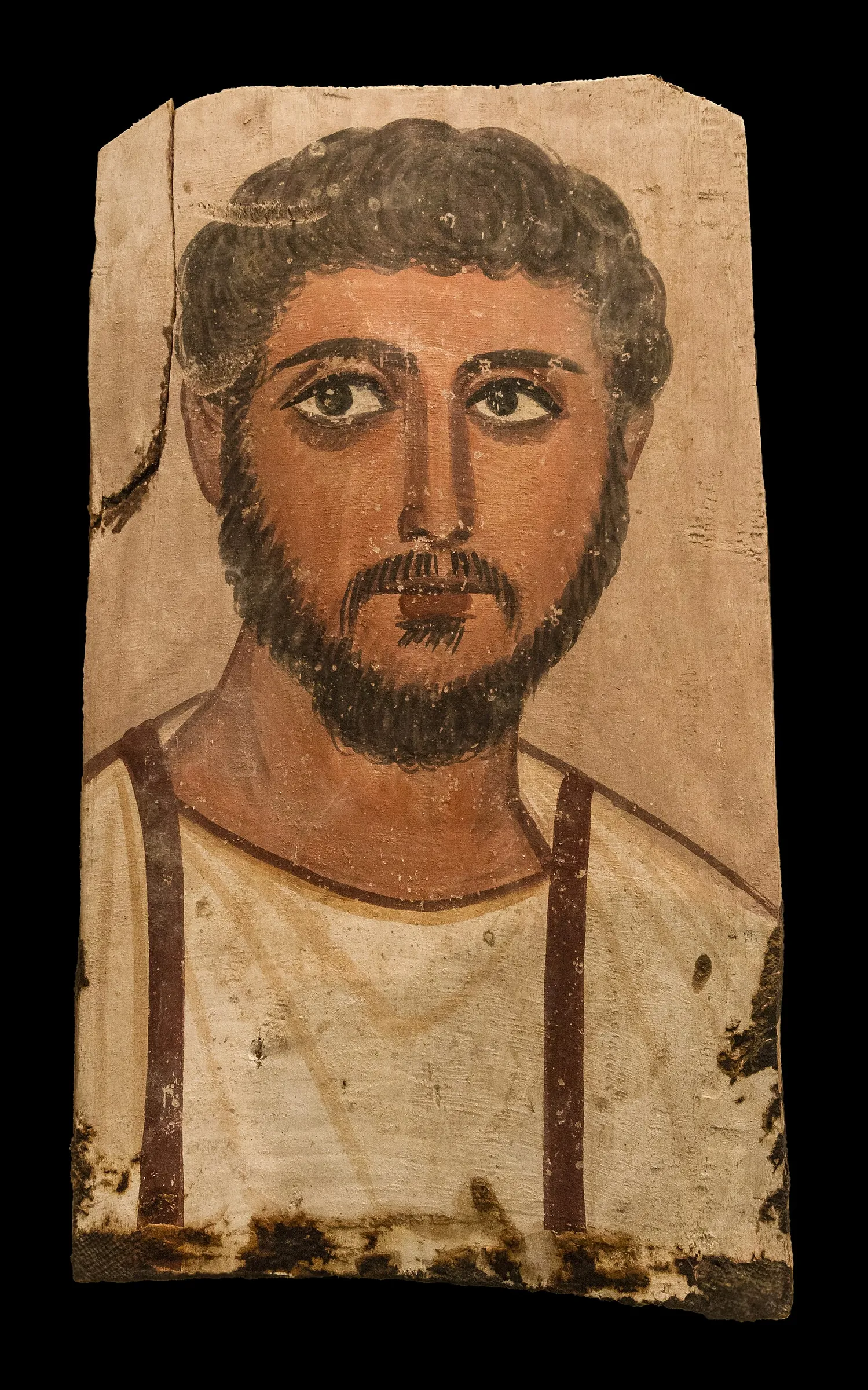
A close reading of portrait, body and burial: paint, social identity and the modern desire to meet an ancient individual’s eyes. The goal is not to exhaust the object, but to make the evidence, limits and museum choices easier to see.
CHAPTER 01
A face and a body
The painted panel belonged to a wrapped body. Museum framing often separates the face from the funerary assemblage that gave it purpose.
Begin with the physical record. Describe scale, edge, surface, joins and damage before turning those observations into a historical claim.
Object record
Record what is visible without filling missing context.
Material note
Connect technique to workshop decisions and available resources.
Context check
Restore the larger assemblage, site and ritual setting.
Museum question
Ask how display, caption and ownership frame the object today.
LOOK AGAINThe painted panel belonged to a wrapped body. Museum framing often separates the face from the funerary assemblage that gave it purpose. What detail on the object could support—or challenge—this interpretation?
A responsible note
The museum history belongs inside the object story. Location, attribution, restoration and ownership should be dated when they can change and qualified when the record remains incomplete.
- Separate stable context from current display information.
- Prefer an object record to an anonymous travel summary.
- Distinguish an original, reconstruction, replica and digital image.
- Keep contested interpretations visible.
CHAPTER 02
Paint as surface
Encaustic and tempera techniques create different kinds of luminosity, edge and texture. Material observation should precede claims about personality.
Begin with the physical record. Describe scale, edge, surface, joins and damage before turning those observations into a historical claim.
Object record
Record what is visible without filling missing context.
Material note
Connect technique to workshop decisions and available resources.
Context check
Restore the larger assemblage, site and ritual setting.
Museum question
Ask how display, caption and ownership frame the object today.
LOOK AGAINEncaustic and tempera techniques create different kinds of luminosity, edge and texture. Material observation should precede claims about personality. What detail on the object could support—or challenge—this interpretation?
A responsible note
The museum history belongs inside the object story. Location, attribution, restoration and ownership should be dated when they can change and qualified when the record remains incomplete.
- Separate stable context from current display information.
- Prefer an object record to an anonymous travel summary.
- Distinguish an original, reconstruction, replica and digital image.
- Keep contested interpretations visible.
CHAPTER 03
Roman Egypt
Clothing, hair and jewellery connect local lives to imperial fashions without erasing Egyptian funerary practice or regional complexity.
Begin with the physical record. Describe scale, edge, surface, joins and damage before turning those observations into a historical claim.
Object record
Record what is visible without filling missing context.
Material note
Connect technique to workshop decisions and available resources.
Context check
Restore the larger assemblage, site and ritual setting.
Museum question
Ask how display, caption and ownership frame the object today.
LOOK AGAINClothing, hair and jewellery connect local lives to imperial fashions without erasing Egyptian funerary practice or regional complexity. What detail on the object could support—or challenge—this interpretation?
A responsible note
The museum history belongs inside the object story. Location, attribution, restoration and ownership should be dated when they can change and qualified when the record remains incomplete.
- Separate stable context from current display information.
- Prefer an object record to an anonymous travel summary.
- Distinguish an original, reconstruction, replica and digital image.
- Keep contested interpretations visible.
CHAPTER 04
Likeness and convention
A portrait can individualise and idealise at once. The direct gaze is powerful, but modern viewers should not mistake intimacy for transparent biography.
Begin with the physical record. Describe scale, edge, surface, joins and damage before turning those observations into a historical claim.
Object record
Record what is visible without filling missing context.
Material note
Connect technique to workshop decisions and available resources.
Context check
Restore the larger assemblage, site and ritual setting.
Museum question
Ask how display, caption and ownership frame the object today.
LOOK AGAINA portrait can individualise and idealise at once. The direct gaze is powerful, but modern viewers should not mistake intimacy for transparent biography. What detail on the object could support—or challenge—this interpretation?
A responsible note
The museum history belongs inside the object story. Location, attribution, restoration and ownership should be dated when they can change and qualified when the record remains incomplete.
- Separate stable context from current display information.
- Prefer an object record to an anonymous travel summary.
- Distinguish an original, reconstruction, replica and digital image.
- Keep contested interpretations visible.
CHAPTER 05
Excavation and dispersal
Portraits entered collections through excavations, dealers and divided finds. Their current isolation can obscure tomb groups and archaeological records.
Begin with the physical record. Describe scale, edge, surface, joins and damage before turning those observations into a historical claim.
Object record
Record what is visible without filling missing context.
Material note
Connect technique to workshop decisions and available resources.
Context check
Restore the larger assemblage, site and ritual setting.
Museum question
Ask how display, caption and ownership frame the object today.
LOOK AGAINPortraits entered collections through excavations, dealers and divided finds. Their current isolation can obscure tomb groups and archaeological records. What detail on the object could support—or challenge—this interpretation?
A responsible note
The museum history belongs inside the object story. Location, attribution, restoration and ownership should be dated when they can change and qualified when the record remains incomplete.
- Separate stable context from current display information.
- Prefer an object record to an anonymous travel summary.
- Distinguish an original, reconstruction, replica and digital image.
- Keep contested interpretations visible.
CHAPTER 06
The ethics of looking
The portrait remains linked to human remains. Display asks visitors to balance curiosity, empathy, evidence and respect.
Begin with the physical record. Describe scale, edge, surface, joins and damage before turning those observations into a historical claim.
Object record
Record what is visible without filling missing context.
Material note
Connect technique to workshop decisions and available resources.
Context check
Restore the larger assemblage, site and ritual setting.
Museum question
Ask how display, caption and ownership frame the object today.
LOOK AGAINThe portrait remains linked to human remains. Display asks visitors to balance curiosity, empathy, evidence and respect. What detail on the object could support—or challenge—this interpretation?
A responsible note
The museum history belongs inside the object story. Location, attribution, restoration and ownership should be dated when they can change and qualified when the record remains incomplete.
- Separate stable context from current display information.
- Prefer an object record to an anonymous travel summary.
- Distinguish an original, reconstruction, replica and digital image.
- Keep contested interpretations visible.
RESEARCH TRAIL
Where to continue
- Institutional collection record and object number.
- Published catalogue or conservation report.
- Archaeological context and provenance documentation.
- Image creator and reuse license.
Editorial review: 16 July 2026. This essay does not claim an unrecorded first-hand visit.